Microsoft made three PCs act like one, and a huge AI model ran
Microsoft demonstrated RDMA over USB4, letting several PCs combine memory and GPU resources to run a single AI model. In the demo, three mini PCs ran Qwen3-235B-A22B.
AI news faster than on the site — on Telegram KARMAZIN MEDIA
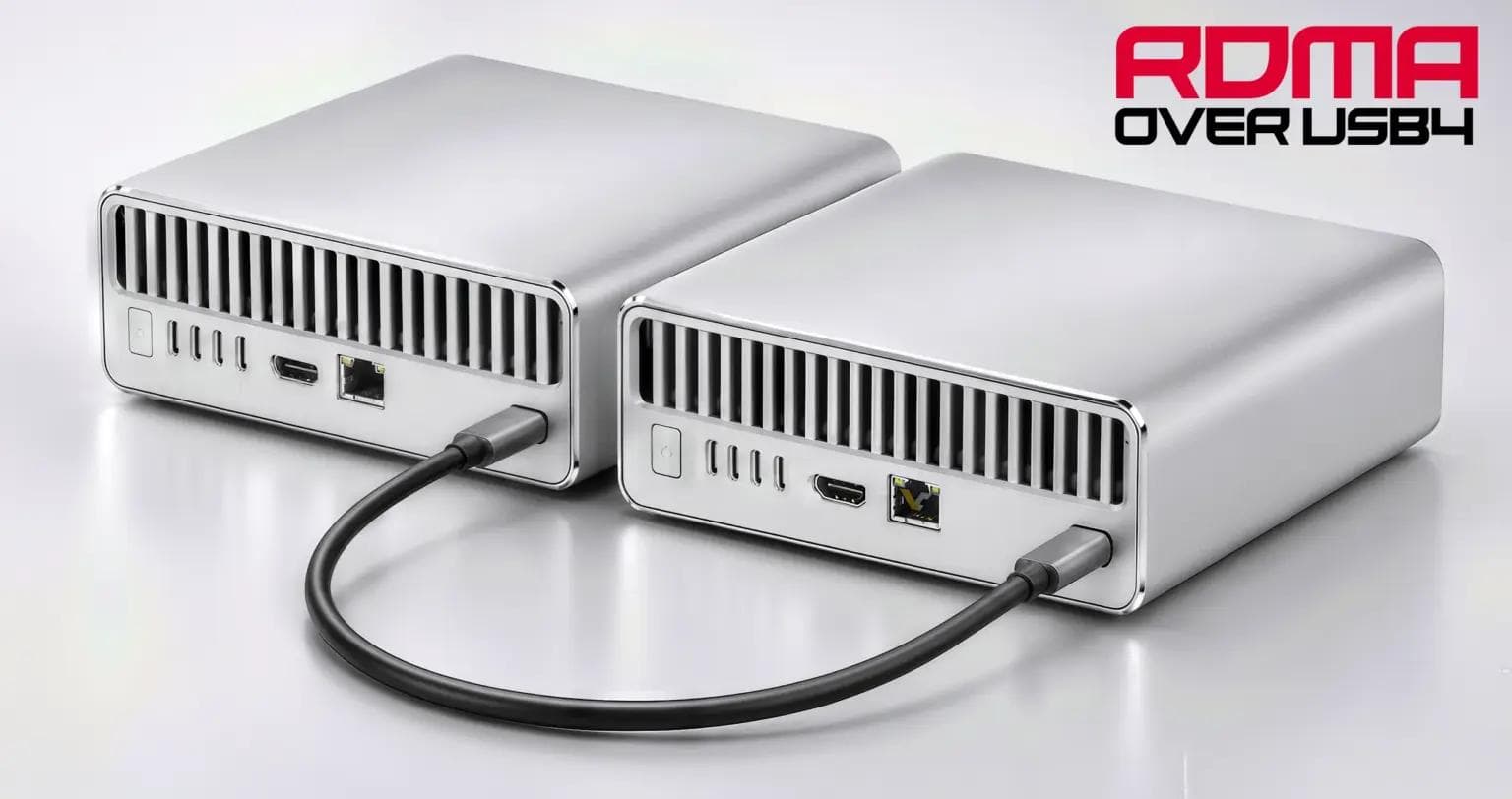
On November 19, Microsoft announced a developer preview of RDMA over USB4 for Windows. Several compatible PCs can be connected with USB4 cables, allowing one AI model to use their combined memory and GPU compute without a separate RDMA adapter, switch, or third-party drivers.
RDMA transfers data directly between the memory of two systems, bypassing most of the traditional networking stack. That cuts latency and CPU overhead. The new NetworkDirect provider for USB4 and a llama.cpp-based test platform are available as open source projects.
For the demonstration, Microsoft used three mini PCs with Ryzen AI Max+ 395 processors and 128 GB of RAM. They ran Qwen3-235B-A22B with 4-bit quantization at roughly 18.5 tokens per second. AMD reported 21.98 tokens per second with its own configuration.
The provider is already available to developers, but running models requires a compatible Windows Insider build that was still being prepared when Microsoft announced the preview. The full test is waiting on that build and USB4 support in every computer. The cluster is still in preview.
Related
 ToolsWhat Is a Token in AI, in Plain Words: Cost, Context Window, How to Estimate
 AI agentsExperiment: I handed all my social media and my website to Grok Bot. Day 2: minus five, an ad filter and the hour the bot chose to skip
 ToolsHow to download a program from GitHub: find the installer, portable ZIP or individual file