AI is about to sift 100 million cosmic alerts every night
A system for the future Argus Array observatory will sort up to 100 million astronomical alerts each night within seconds. The goal is to catch rare events before they fade and other telescopes lose the chance to study them.
AI news faster than on the site — on Telegram KARMAZIN MEDIA
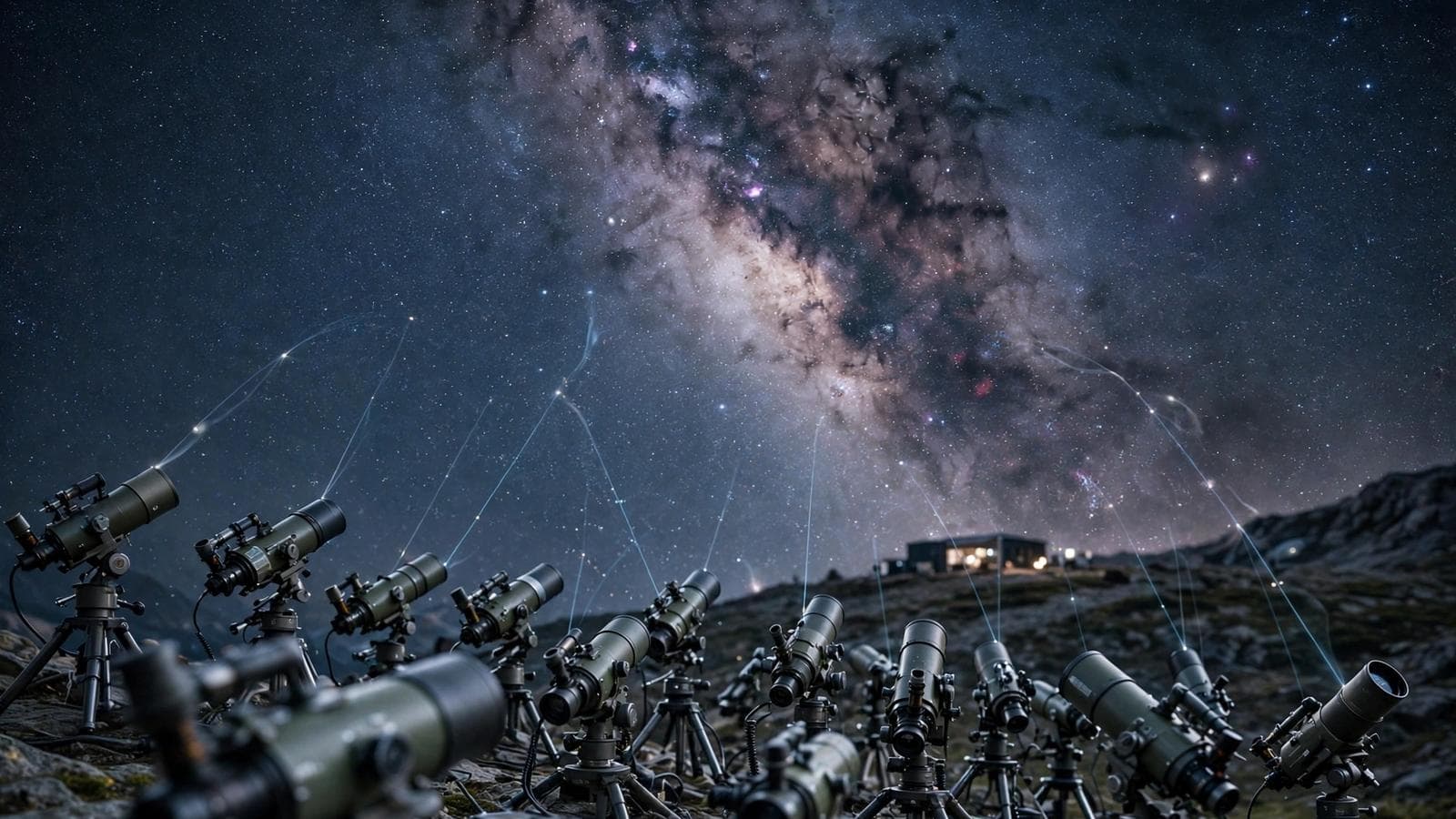
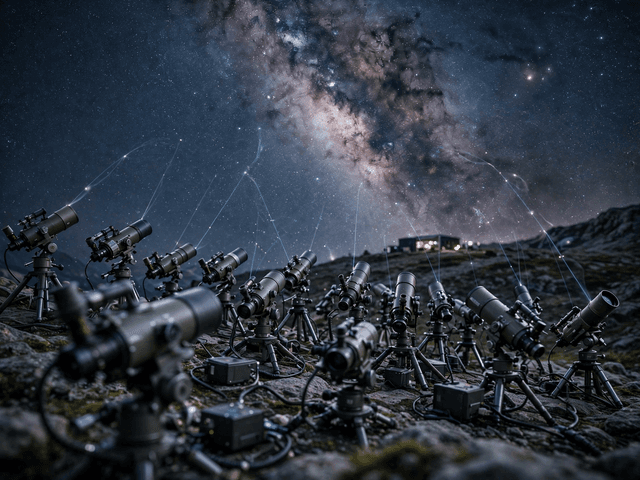
An international team led by the University of Minnesota is developing an AI system for the future Argus Array observatory. It will continuously scan the northern sky with roughly 1200 small telescopes and process up to 100 million astronomical alerts each night.
The signals could point to supernova explosions, fast radio bursts and neutron star collisions. These events can change rapidly, leaving only minutes for follow-up observations. The system will discard less promising alerts within seconds and send the most interesting ones to researchers and other observatories within minutes.
Argus Array will combine 1200 telescopes into a single system with 122 gigapixels of resolution. The raw image stream may reach roughly 2000 Gbit/s. For comparison, the Vera Rubin Observatory is expected to generate about 10 million alerts per night. The processing will use central and graphics processors alongside machine learning algorithms.
The system will be part of the Eric and Wendy Schmidt Observatory System, which will also include the Deep Synoptic Array radio telescope and instruments for spectroscopic and infrared observations. Developers plan to have a working prototype ready by the start of Argus Array's first observations, expected in 2027. The software will be open source.
For now, it is a prototype waiting for 2027.
Related
 AI agentsExperiment: I handed all my social media and my website to Grok Bot. Day 2: minus five, an ad filter and the hour the bot chose to skip
 ToolsHow to download a program from GitHub: find the installer, portable ZIP or individual file
 ToolsHow to track website changes and get price alerts with changedetection.io