AI made 3D models from pictures, and the printer rejected almost half
Five AI generators built 20 models from images, and nine failed the slicer check. Here are the defects and a script that catches them in minutes.
AI news faster than on the site — on Telegram KARMAZIN MEDIA
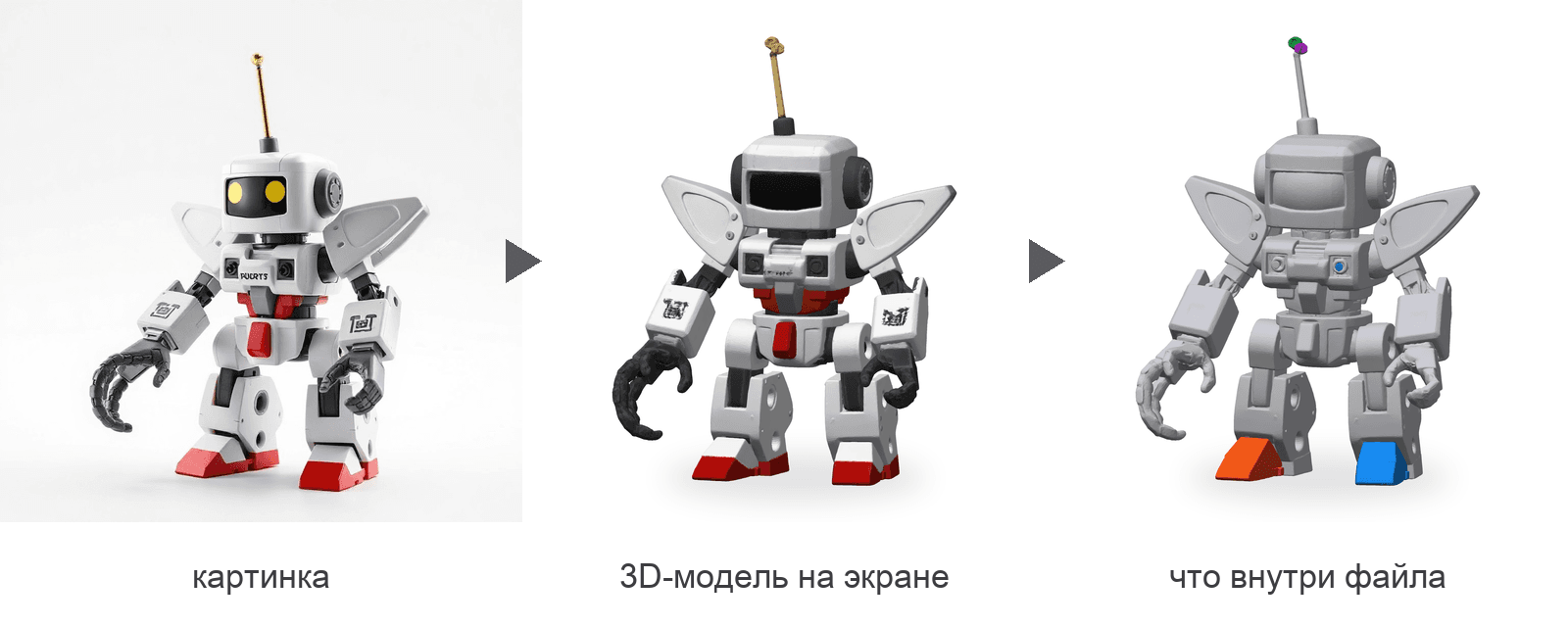


Feed an AI a picture of a figurine and get a printable 3D model a couple of minutes later. Sounds like magic, and the magic ends in the slicer. An engineer at a startup building AI tools for 3D printing ran five generators on four images and checked all twenty models against the same rules Bambu Studio uses to decide whether to flag a file with a warning icon. Nine of them failed.
The lineup: open models TripoSR, Microsoft's TRELLIS and TRELLIS.2, Meta's SAM 3D Objects, plus Tencent's closed Hunyuan3D 3.1. The images were picked to be tricky: a robot with detached shoulder pads and a thin antenna, a mug with a through handle, glasses with a wire-thin frame, and a dragon with webbed wings.
TripoSR and TRELLIS.2 did worst, failing all four. The TripoSR mug was stuffed with 92 tiny shards floating inside it, plus 612 open edges. The TRELLIS.2 robot had over three thousand edges shared by four triangles instead of two, and its feet floated apart from the legs, not even touching the bed. Funny detail: the older TRELLIS came out almost clean. The new version got better at complex shapes and broke the geometry along the way.
SAM 3D Objects and Hunyuan3D 3.1 passed every test, with a catch. Anything drawn flat in the picture, like eyes, logos and lettering, goes into the texture instead of the surface. The preview looks great, while the printer produces a smooth blank with barely visible bumps.
Scale is another trap. Generators fit the object into a cube about one unit wide, and STL stores no units, so the slicer sees a robot one millimeter tall. Bambu Studio tries to guess the scale from volume and ends up with a 2.5 cm figurine one time and a one meter giant the next. The fix is easy: set the real size on one axis with proportions locked.
The most useful part: the author shared a short Python script using the trimesh library that reports dimensions, open edges, bad edges and the number of separate pieces in a couple of minutes. Run it while the bed heats up and you know whether the model is worth the filament.
Bottom line: AI already sculpts decent 3D, but printing its raw files blindly is a bad idea. Check first, print second.
Related
 ToolsHugging Face: What It Is, Open AI Models and How to Use Them
 AI agentsExperiment: I handed all my social media and my website to Grok Bot. Day 2: minus five, an ad filter and the hour the bot chose to skip
 ToolsHow to download a program from GitHub: find the installer, portable ZIP or individual file