Claude cracks open a protein mystery biologists chased for 40 years
Anthropic's AI helped map a mysterious protein capsule in 3D for the first time, doing in 34 hours what usually takes weeks.
AI news faster than on the site — on Telegram KARMAZIN MEDIA
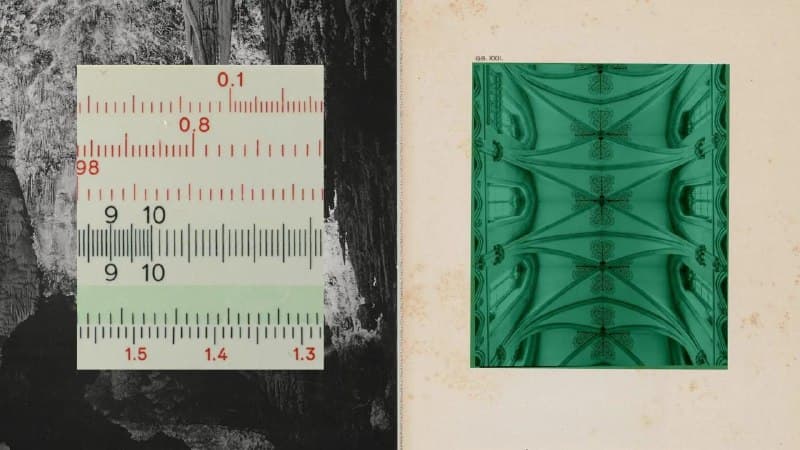


Biologists have been puzzling over a protein capsule since 1986, and now it has been seen in 3D for the first time with Claude doing much of the heavy lifting. Anthropic's biology lab shared the first 3D structure of a vault particle from prokaryotes, the world of bacteria and the viruses that infect them.
Vault particles are huge hollow barrels of protein. They sit in almost every cell of our body and weigh about three times as much as a ribosome, yet nobody really knows what they do. Ideas range from moving molecules around to shielding cells from toxins and cancer drugs to immunity. None has been proven.
Under the researchers' direction, Claude searched a database of about 15 billion predicted proteins and found relatives of the vault protein in bacteria and archaea. It then turned chosen sequences into DNA designs ready to order, helped work out a fast way to isolate the particles, and ran the cryo-electron microscopy processing in the open-source RELION software on a compute cluster.
The numbers: isolating the particles normally takes about three days, and the team got it down to roughly 90 minutes. A first 3D model was ready in 34 hours, which the team says would usually take weeks. The particle is built from 96 copies of a single bacteriophage protein and weighs about 9.5 megadaltons, one of the largest protein shells known in prokaryotes. The human version has 78 copies.
Claude also spotted a small unidentified molecule tucked into every protein copy. Its shape resembles coenzyme A, and if that holds up, it would be the first real hint at what vaults are for.
It was not flawless. The researchers say Claude first argued against the very isolation method that ended up working. The results are out as a preprint, with structures and data to follow.
The function is still a mystery. What changed is that a team with little structural biology experience closed this kind of problem in a few months with an AI doing the grunt work.
Related
 AI agentsExperiment: I handed all my social media and my website to Grok Bot. Day 2: minus five, an ad filter and the hour the bot chose to skip
 ToolsHow to download a program from GitHub: find the installer, portable ZIP or individual file
 ToolsHow to track website changes and get price alerts with changedetection.io