This free Claude skill cranks out viral TikTok cartoons on your own PC
Give Claude Code a topic and it writes, voices and renders a one-minute cartoon for Reels and TikTok. No video generator, all code, all on your machine.
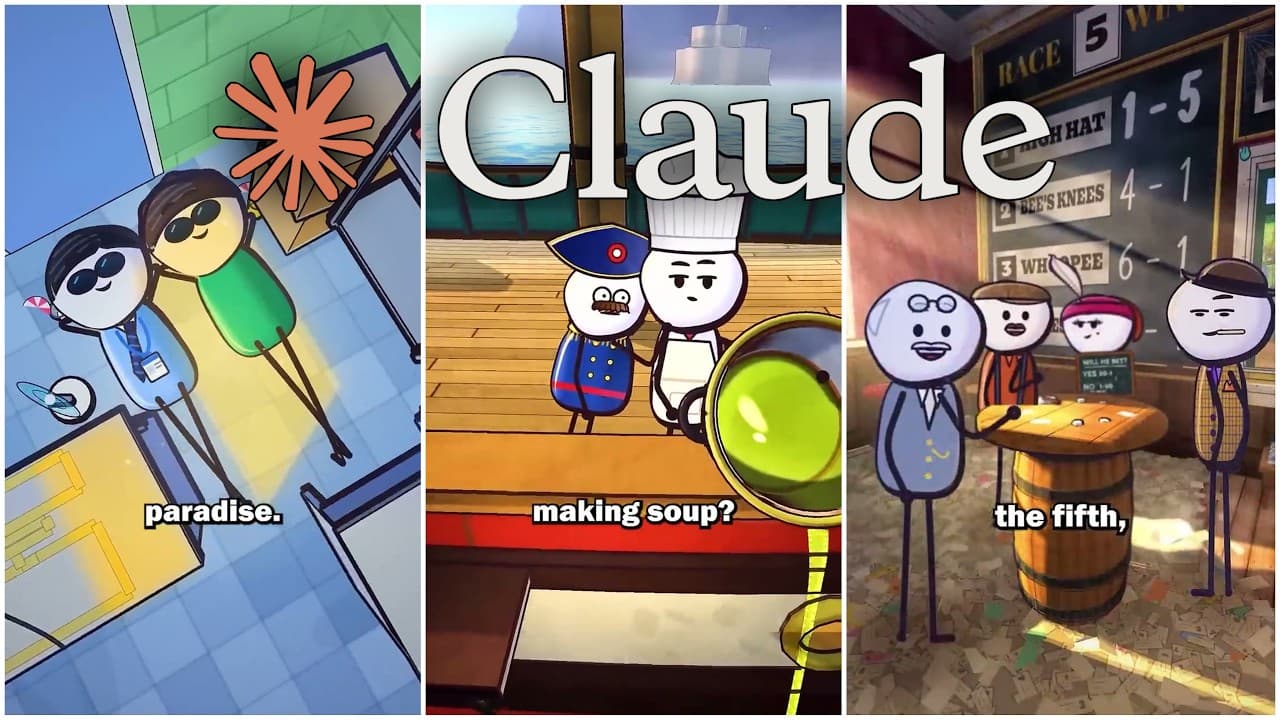
Minute-long cartoon stories are all over TikTok and Reels right now: flat little characters running around a bright 3D town, a camera gliding between houses, a jaunty march in the background. The creator behind the YouTube channel Mr omi wanted to see whether Claude could make these on its own, and ended up releasing a free skill that builds them right on your computer.
He started by feeding Claude the latest 20 shorts from one such channel. The model went through them frame by frame at 30 fps and wrote a style bible: how the script works, why the opening hook is a single sentence, how the camera moves, what the shadows and outlines look like. His first attempt at an original short looked cheap, so he put seven agents on it, each comparing frames against the references on one topic: ink lines, lens blur, camera glides, shadow colours. The result, a 67-second story about the Broughton bridge that collapsed under marching soldiers in 1831, sits in the repo with all of its source code.
The key detail is that there is no AI video generator involved. Everything is rendered in code with three.js inside Remotion, so every frame stays consistent and any scene can be fixed precisely instead of regenerated from scratch and hoping for the best.
Using it is simple. Copy the skill folder to ~/.claude/skills/cartoon-3d-short/, install Remotion with @remotion/three, plus Node, Python 3 and ffmpeg. Then tell Claude Code something like "Use the cartoon short skill and make a short about…" and give it a topic. From there it gathers facts, writes the script, records the voice, plans the shots, shows you stills and renders a 55 to 70 second vertical short in 2K with sound effects and music. One tip from the docs: point Remotion's temp folder at a big drive, since every bundle copies about 1.3 GB into it.
The skill came out on November 1 under the MIT license and picked up almost 400 GitHub stars in a day and a half. The author asks people to bring their own story, characters and voice, and to use other people's shorts only as a style reference.
A cartoon factory for social media now fits in one folder and costs exactly as much as your tokens.
 Tools
 Tools
 Tools