Keyboards are dead: these glasses type the words you never say out loud
Startup Subvocal has unveiled glasses that read your facial muscles and turn silent speech into text at over 200 words per minute. Preorders are already open.
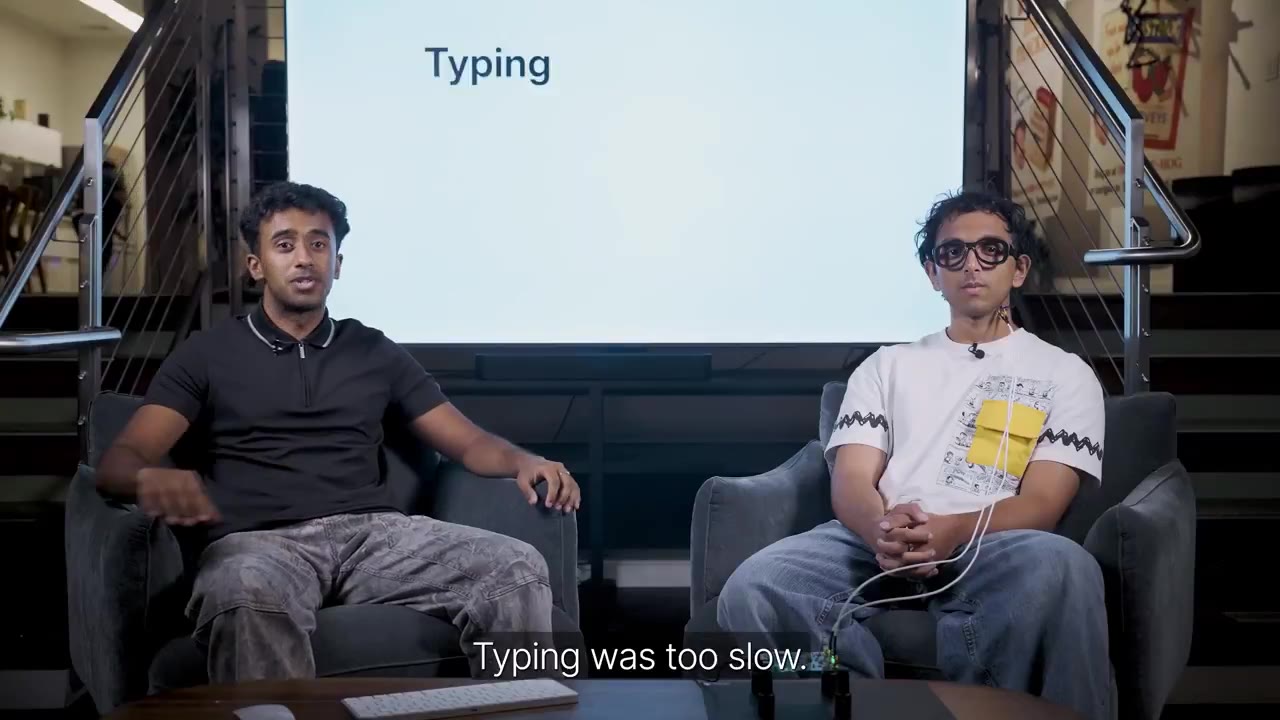
Two students in San Francisco have shown off glasses that turn words you mouth silently into text. The demo video passed 9 million views on X within a day, and preorders opened alongside it.
The company is called The Subvocal Company, founded by Aarush Yadav and Arnav Kumar. Their pitch is simple: typing is slow, and talking to your computer out loud is awkward, especially on a train, in a cafe or in an open office. Subvocal offers a third option. You mouth a phrase without a sound, the glasses pick up the movement of your speech muscles, and an AI model decodes it into text on the spot. The founders say it reaches more than 200 words per minute, which is normal speaking pace.
There are no cameras and no video lip reading. The glasses send low power radio waves through the face and track how the signal changes as the muscles move. Background noise doesn't matter because the device never needs your voice. It doesn't read thoughts either: only words you deliberately articulate get decoded. The text can go anywhere, from messages and notes to email or a chat with ChatGPT and Claude.
The project is only about four months old. The first version was built at a hackathon, where it didn't even win, and later came a board with antennas taped to the founders' faces. Today the prototype still runs on wires, and the sleek glasses on the website are a design direction for now. The company has raised $1.3 million from Y Combinator and Afore Capital.
You can reserve a pair now, but only in the US: a refundable $199 deposit toward an early bird price of $499 instead of $699. Shipping is expected in the first quarter of 2027, pending approval from the FCC, the US communications regulator. Nobody has independently tested the speed or accuracy yet.
If the glasses reach shelves as promised, dictating will finally stop being a public performance.
 Tools
 Tools
 Tools