AI learned to burn: this $149 candle's flame never repeats itself
The Arduboy creator built a digital candle whose flame is generated live by a tiny neural network trained on footage of a real one.
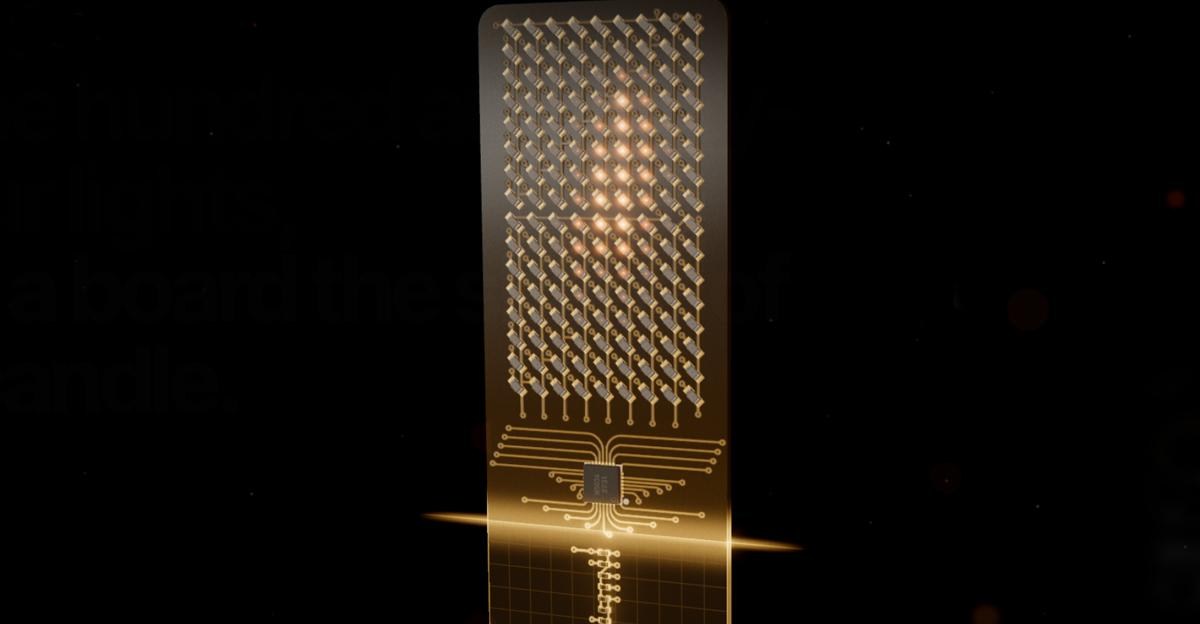
Kevin Bates, the maker of Arduboy, the credit card sized game handheld, and of a flexible Tetris you can wrap around a magazine, is now selling something very different. It is a $149 digital candle, and its flame is drawn by a neural network.
The candle is about 10 inches tall. On top sits a 9 by 16 grid of 144 amber LEDs with adjustable brightness. At the bottom there is a USB-C port for power (no battery, a dock is included) and an ESP32-S3 chip with Wi-Fi and Bluetooth. That chip runs a tiny model with just 3,545 parameters. It was trained on footage of a real burning candle, describes the flame's behavior with eight numbers and generates it on the fly at 30 frames per second.
The trick is that this is not a looping animation. The flame never repeats, and every candle has its own. On such a low resolution grid it looks surprisingly convincing, even if it can't fully match the mood of a real flame. On the plus side, it won't set anything on fire.
Tinkerers get a bonus: the project is open source. You can turn the candle into a clock, a notification display or run Conway's Game of Life on it. It's on sale now with a black or white board, and you can watch it burn virtually at DigitalCandle.ai.
A neural network that does exactly one thing, and does it honestly: pretends to be fire.
 Tools
 Tools
 Tools