Opera now runs AI models locally, right inside its browser
Opera One gets WebAI: sites and extensions can use a local model like Gemma with no cloud, no subscription and no API key.
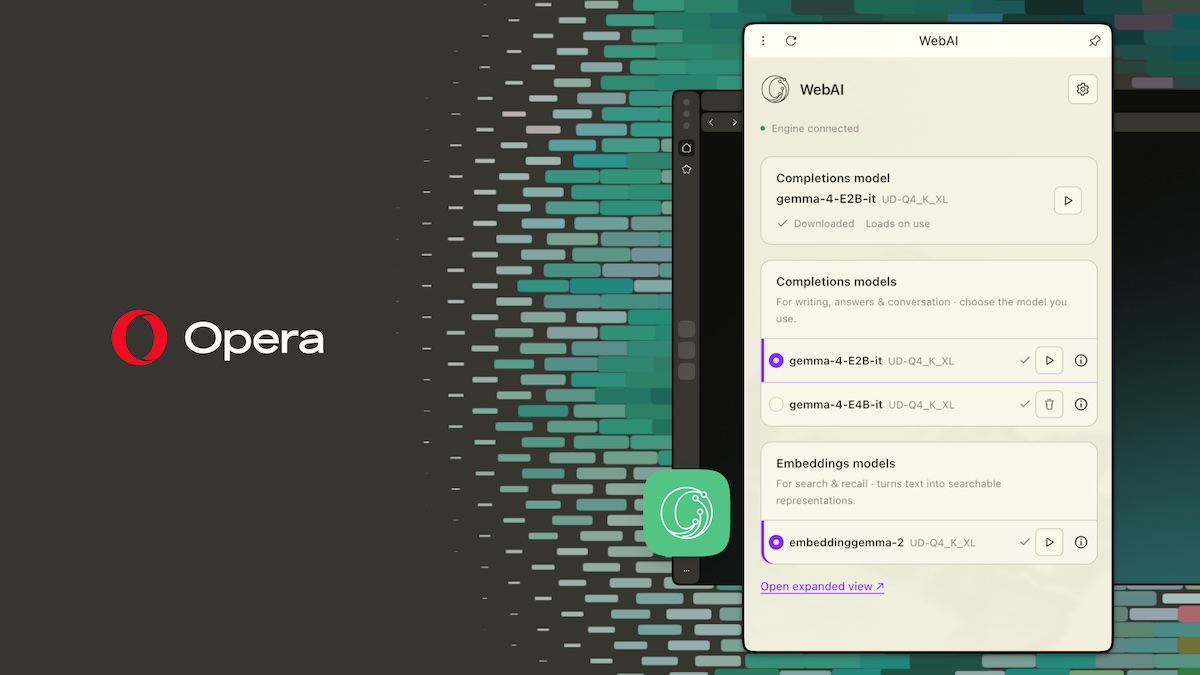
On October 27 Opera started rolling out WebAI in Opera One. It is an early preview: the browser downloads an open AI model to your computer, and websites and extensions can then use it with no cloud, no subscription and no API key. Opera GX and Opera Neon are set to get it next.
At launch you get Google's Gemma models, and on Apple silicon Macs also Apple's own on-device model. WebAI can generate text, sort content into categories and find how pieces of information relate. WebAI itself is a proposed web standard that, according to Opera, has backing from Google and Microsoft.
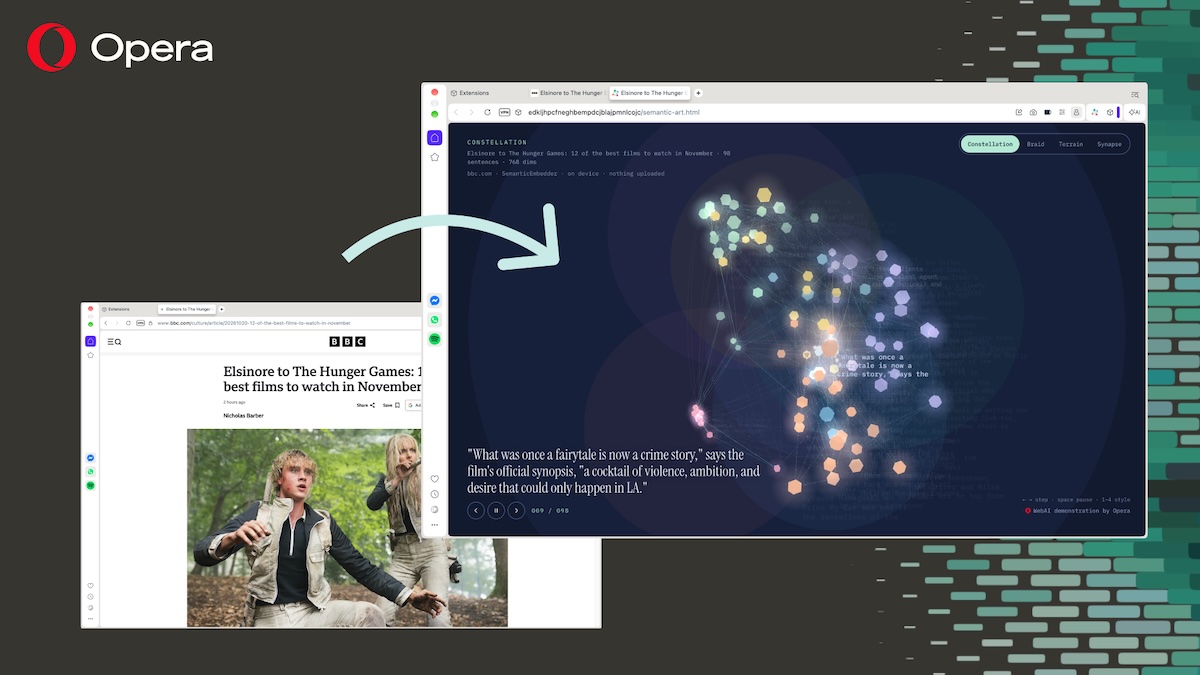
It is off by default. You turn it on in Settings, under Opera AI, with the Enable Web AI API switch. Until then nothing is downloaded, and each site has to be granted access separately. Opera also released a few sample extensions, including one that turns an article into a moving map where sentences with similar meaning sit next to each other.
It runs on 64-bit Windows PCs with Intel or AMD chips and on Apple silicon Macs. Intel Macs, Linux and Windows on Arm are not supported yet. Speed depends on your hardware, since your laptop does the work instead of a data center.
Opera first showed local models back in 2024, but only in a developer build. Now anyone can switch them on. For people who build their own extensions with AI coding tools, this is free AI with no bill per request. For everyone else it is a curious toy for now, but a private one.
Source: Habr
Original source: Opera (Norwegian browser maker), WebAI launch press release